
Let us be completely honest with each other for a moment.
You have probably watched more than enough YouTube videos about how to grow on YouTube. You started your channel. You uploaded a few videos. And then nothing happened. No views. No subscribers. Just the sound of silence while you wonder whether any of this is even worth your time.
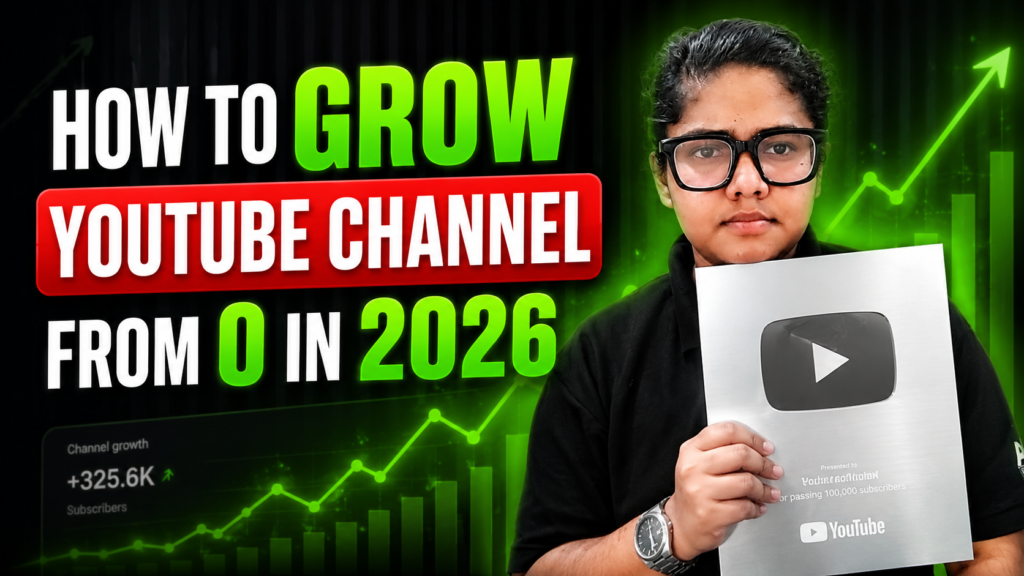
Growing a YouTube channel from zero in 2026 is absolutely achievable. YouTube now has over 2.7 billion logged in users every single month. It is the second largest search engine on the planet. People use it to learn, to make buying decisions, to find solutions to problems they are facing right now. If you understand how to position your content in front of those searches, you do not need to chase trends or go viral. You just need a clear strategy and the patience to let it work.
now. If you understand how to position your content in front of those searches, you do not need to chase trends or go viral. You just need a clear strategy and the patience to let it work.
This guide covers every step our team at Shoniy Digital uses with creators and brands to grow their YouTube presence from nothing into something that consistently attracts the right viewers and converts them into loyal subscribers.
What You Will Learn in This Guide
| Section | What You Will Learn |
| Step 1 | How to choose a profitable niche without overthinking it |
| Step 2 | How to set up your channel so YouTube knows who to show it to |
| Step 3 | How to create videos that people actually watch all the way through |
| Step 4 | YouTube SEO explained simply, titles, descriptions, tags, thumbnails |
| Step 5 | How to use YouTube Shorts to grow ten times faster |
| Step 6 | Practical ways to reach your first 1000 subscribers |
| Step 7 | Analytics that matter and how to read them properly |
| Bonus | Common mistakes and pro tips from real channel strategy work |
Step 1: Find a Niche That Actually Has an Audience
Before you touch a camera, a microphone, or a thumbnail template, you need to answer one question clearly. What is your channel actually about?
This sounds simple. It is not. Most beginners pick a niche that is either too broad to compete in, too narrow to build a real audience, or based entirely on what they feel like making rather than what people are genuinely searching for.
A niche is not just a topic. It is the intersection of what you know, what people want to learn, and where there is space in the market for your voice.
Three Questions to Find Your Right Niche
- Can you comfortably create at least 50 videos on this topic without running dry? If you have to force ideas after 10, that is a sign.
- Are people actively searching for this content on YouTube and Google right now? Passion without demand is just a hobby.
- Is there a natural path to earning from this audience through services, courses, consulting, or partnerships? Growth without monetisation is just entertainment.
Pro Tip Use the free version of TubeBuddy or VidIQ to check search volume for your niche before you commit. If the numbers are near zero, move on. If competition is enormous, go more specific.
Profitable Niches That Are Growing in 2026
| Niche | Why It Works Right Now | Monetisation Path |
| AI Tools and Automation | Fastest growing category on all platforms | Courses, consulting, affiliate |
| Digital Marketing for Beginners | Every business needs this knowledge | Services, coaching, brand deals |
| Personal Finance India | Massive underserved search audience | Affiliates, AdSense, courses |
| YouTube Growth Strategy | Creators always need better results | Coaching, tools, courses |
| Freelancing and Remote Work | Post pandemic demand is still rising | Coaching, job boards, partnerships |
| Study and Productivity | Huge student audience searching daily | Courses, stationery, book affiliates |
Step 2: Set Up Your Channel So YouTube Understands It
Your channel setup is not just cosmetic. It is how you tell YouTube exactly who your content is for, so the algorithm can match it with the right viewers.
Most beginners rush this part. They pick a random name, upload a blurry profile picture, and skip the description. Then they wonder why YouTube is showing their videos to the wrong people.
Channel Name
Keep it clean, easy to remember, and directly connected to what your channel teaches or offers. Avoid numbers, underscores, and anything that looks cluttered in a search result. Your name is a brand. Treat it like one.
Channel Description
Write at least 200 words. Put your primary keyword naturally in the very first sentence. Explain clearly who your channel is for, what they will learn, and how often you post. Think of this section as your channel’s sales page because for new visitors, that is exactly what it is.
Channel Art and Profile Image
Your banner and profile image are the first thing someone sees when they visit your channel. Use Canva to create a clean, professional banner that states your niche and posting schedule clearly. For your profile image, use a real face. People subscribe to people, not logos.
Channel Keywords
In YouTube Studio, go to Settings, then Channel, then Basic Info. Add 10 to 15 relevant keywords here. This is invisible to viewers but very visible to YouTube. It helps the algorithm understand exactly what your channel is about.
Pro Tip Create a 60 to 90 second channel trailer. This is what non subscribers see first when they land on your page. Tell them who you are, what your channel covers, and why they should subscribe. Make it tight, specific, and energetic.
Step 3: Create Videos People Actually Watch All the Way Through
Here is the single most important thing to understand about how YouTube works in 2026. YouTube does not promote videos. YouTube promotes viewer satisfaction.
Every decision you make about your content should lead back to one question. When someone finishes watching this, will they feel like their time was well spent? Because if they do, YouTube will show your video to thousands more people automatically.
This is not about production value. You do not need a studio. You do not need a professional camera. What you need is a video structure that holds attention from the first second to the last.
The Video Structure That Retains Viewers
- The Hook (first 30 seconds): Tell the viewer exactly what they will learn and why it matters to them today. Do not start with an intro. Do not say welcome back. Get straight to the point.
- The Setup (30 seconds to 2 minutes): Briefly explain why this topic is important and what pain or problem it solves for the viewer.
- The Main Content: Deliver everything you promised. Use clear examples. Break complex ideas into steps. Speak as if you are talking to one person, not a crowd.
- The Engagement Moment: Somewhere in the middle, ask a genuine question. Something like, which of these have you tried before? This increases comment activity and signals engagement to the algorithm.
- The Close: Summarise the key takeaway in one or two sentences. Then send the viewer to your next video. Never end a video without telling the audience what to watch next.
Pro Tip The viewers who drop off in the first 30 seconds are the ones YouTube watches most closely. If your retention is low in that window, your video will not be recommended widely no matter how good the rest of it is. Your hook is everything.
Step 4: YouTube SEO, The Real Engine Behind Growth
YouTube SEO covers titles, descriptions, tags, and thumbnails working together
YouTube SEO is what separates channels that grow from channels that post into the void. It is the process of making sure YouTube understands exactly what your video is about so it can match it with viewers who are already searching for that content.
The good news is that YouTube SEO in 2026 is not complicated. It does not require expensive tools or technical knowledge. It requires understanding four key elements and getting each one right.
Video Titles That Rank and Get Clicked
Your title needs to do two things at the same time. It needs to tell YouTube what your video is about using real search language. And it needs to make actual humans want to click on it.
- Put your primary keyword as early in the title as possible, ideally within the first four words
- Keep your title between 50 and 70 characters so it does not get cut off in search results
- Use numbers, brackets, and clarity words like Complete Guide, Step by Step, For Beginners, and 2026
- Create a small curiosity gap, give enough information to be relevant but hold something back to earn the click
Title Formulas That Consistently Perform
| Formula | Example Title |
| Keyword plus Year plus Outcome | YouTube SEO 2026: How to Rank Any Video on Page One |
| How to plus Keyword plus Result | How to Grow a YouTube Channel Fast from Zero |
| Number plus Keyword plus Year | 7 YouTube Mistakes That Are Killing Your Growth in 2026 |
| Why plus Problem plus Fix | Why Your YouTube Channel Is Not Growing and How to Fix It |
| Complete Guide Format | YouTube Shorts Strategy 2026: The Complete Beginner Guide |
Video Descriptions That Help You Rank
Write a minimum of 300 words in every video description. Use your primary keyword naturally in the very first sentence. Add related terms throughout the description organically. Include timestamps, links to related content, and one clear call to action at the end.
Think of your description as a mini article about the topic of your video. The more helpful and relevant it is, the better YouTube understands your content and the more it trusts your channel.
Tags, How to Use Them in 2026
Tags matter less than they used to but they are still worth getting right. Use 8 to 12 tags per video. Start with your exact primary keyword. Then add natural variations and closely related terms. Never add tags for topics your video does not cover. YouTube penalises irrelevant tagging.
Thumbnails, Your Biggest Growth Lever
Nothing determines your click through rate more than your thumbnail. A great video with a weak thumbnail will not grow. A decent video with a compelling thumbnail can perform beyond all expectations.
- Use high contrast colours. Avoid dark or muddy backgrounds that blend into the YouTube interface
- Include a face with a clear, expressive emotion. Surprise, curiosity, and confidence perform best
- Use bold readable text with no more than five words. It must be readable at mobile thumbnail size
- Make sure the thumbnail communicates the video topic instantly without needing the title to explain it
Pro Tip Test two different thumbnails for every video using YouTube Studio’s A/B testing feature. Even a one or two percent improvement in click through rate compounds into thousands of additional views over the lifetime of a video.
Step 5: Use YouTube Shorts to Reach New Viewers Fast
YouTube Shorts are the fastest discovery tool available to new creators in 2026
If you are starting a channel from zero in 2026 and you are not using Shorts, you are skipping the most accessible growth tool on the platform right now.
YouTube Shorts are vertical videos of 60 seconds or less that are pushed through the Shorts feed to massive audiences, including people who have never seen your channel before. Unlike long form videos which depend heavily on search and recommendation history, Shorts are distributed to cold audiences by default.
That means a brand new channel with zero subscribers can get thousands of views on a Short within 24 hours. That kind of reach takes months to build with long form content alone.
How to Build a Shorts Strategy That Works
- Repurpose your best long form moments into Shorts. Take the single most valuable 45 to 60 seconds from every main video and turn it into a Short. You are creating one piece of content and getting two distribution channels from it.
- Create standalone tip Shorts. These are quick answers to common questions in your niche. Format: problem in the first two seconds, solution in the next 30 seconds, call to action in the final five seconds.
- Use Shorts to drive traffic to your long form content. End every Short with a specific reason to watch the full video. Pin a comment with the link.
- Post three to five Shorts per week. Consistency in Shorts signals to the algorithm that your channel is active and worth recommending.
Pro Tip The first two seconds of your Short decide everything. If you do not hook the viewer instantly, they swipe away and YouTube reads that as a quality signal against your video. Start with the most surprising or most useful moment, not an introduction.
Step 6: How to Get Your First 1000 Subscribers
The first thousand subscribers is the hardest milestone on YouTube. Not because it requires the most skill, but because you are doing everything right with almost no feedback or data to guide you. You have to trust the process before you can see the results.
Here is what actually moves the needle at this stage.
- Publish once a week without missing. The algorithm needs a consistent signal to understand and recommend your channel. One quality video every week outperforms sporadic bursts of five videos followed by silence.
- Focus on searchable content in the beginning. Make videos people are actively looking for, not just content you feel inspired to create. Inspiration without search demand gets zero views.
- End every video with a specific reason to subscribe. Not just subscribe for more content. Tell them exactly what they will get. Subscribe if you want a new video on YouTube growth every week.
- Reply to every single comment in your first month. Comment activity is a direct engagement signal to YouTube. It also builds genuine community, which makes people come back.
- Share your videos in communities where your target audience already spends time. Relevant subreddits, Facebook groups, LinkedIn posts, WhatsApp communities. Not as spam, as genuine value.
- Collaborate with other small creators in the same niche. Even a channel with 300 subscribers can send you real, targeted traffic if their audience is the right fit.
Step 7: The Analytics That Actually Predict Growth
insights.
Focus on the metrics that predict growth, not just the numbers that feel good
Most beginners obsess over subscriber count. That is understandable but it is the wrong focus. Subscriber count is a lagging indicator. It tells you what already happened. The numbers below tell you what is about to happen.
| Metric | What It Tells You | Healthy Target in 2026 |
| Click Through Rate (CTR) | How compelling your thumbnail and title are | 4 to 10 percent is strong |
| Average View Duration | How much of your video people watch | Above 50 percent of total length |
| Audience Retention | Where viewers drop off and why | Above 60 percent at the 30 second mark |
| Impressions | How often YouTube showed your video to someone | Grows as quality improves |
| Returning Viewers | People who came back to watch more | Higher percentage means real community |
| Traffic from Search | How much organic search is finding you | Should grow month over month |
Check these numbers weekly. When a video performs above your channel average, study it. What was the thumbnail? How did the title read? What was the hook? Then replicate the pattern deliberately.
Common Mistakes That Kill New Channels Before They Take Off
Quitting Before the Algorithm Has Enough Data
The YouTube algorithm takes time to understand your channel. It needs at least 30 to 50 videos worth of data before it begins recommending you confidently. Most creators quit at video 8 or 12. The ones who keep going past video 50 are the ones you see growing.
Trying to Copy Large Channels Directly
Trying to replicate what a channel with a million subscribers does, with a phone and no budget, will not work. Small channels win by being more specific and more personal, not by competing on production value. Your authenticity is your advantage, not your liability.
Uploading With No SEO Strategy
Creating genuinely helpful content and then giving it a vague title, no description, and a boring thumbnail means nobody will ever find it. SEO is not extra work you do after you make a video. It is part of making the video.
Posting Randomly With No Schedule
Going from five uploads in one week to nothing for two months confuses the algorithm and trains your audience not to expect anything from you. Pick a schedule you can genuinely maintain and treat it like a professional commitment.
Not Having a Clear Call to Action
Every video should tell the viewer what to do next. Subscribe, watch this video, leave a comment, download something. If you end a video without a specific next step, most viewers will just scroll away. Direct them intentionally.
Pro Tips From Our Team at Shoniy Digital
Pro Tip Batch your content. Spend one day filming several videos and one day editing. Trying to create one video from start to finish every single day burns out creators faster than anything else.
Pro Tip Build content clusters. Instead of random standalone videos, plan a five part series around one topic. Series keep viewers watching multiple videos in a single session, which dramatically improves your session time metric.
Pro Tip The first 48 hours after publishing are the most important. YouTube tests your video with a small initial audience. Promote it actively in that window to give it the engagement signals it needs to get pushed further.
Pro Tip Use chapters in every video. They improve watch time because viewers can jump to what they need. And they come back because they know where to find specific information. Chapters make your video feel like a resource, not just a one time watch.
Pro Tip Start building an email list from your very first video. YouTube can change its algorithm, limit your reach, or demonetise your channel. Your email list is the only audience you truly own regardless of what any platform does.
Frequently Asked Questions
How long does it actually take to grow from zero?
Channels that post weekly, use proper SEO, and create searchable content typically reach 1000 subscribers within 6 to 12 months. Channels that add a consistent Shorts strategy alongside long form content can grow noticeably faster, sometimes in 3 to 4 months. There is no shortcut, but there is a clear path.
Do I need expensive equipment to start in 2026?
No. A modern smartphone records better video than professional cameras from a decade ago. Good lighting matters more than your camera. A ring light costs under a thousand rupees and changes the visual quality of your content dramatically. Start with what you have. Upgrade when you can afford to.
How many videos should I post every week?
One well researched, properly optimised long form video per week plus three to five Shorts is the sweet spot for most creators starting out. Quality always wins over quantity. Five rushed videos will never outperform one video that is genuinely helpful and correctly optimised.
Is it still possible to grow on YouTube in 2026 as a beginner?
Absolutely. YouTube has never been more accessible for new creators, largely because of Shorts giving small channels the same distribution opportunity as established ones. The platform rewards viewer satisfaction above everything else. That is a metric that has nothing to do with how old your channel is.
What is the single most important ranking factor right now?
Watch time combined with viewer satisfaction. If people click on your video and watch it all the way through, and then feel satisfied enough to click on another video or come back to your channel later, YouTube will push your content to more people automatically. Everything else supports this. The thumbnail gets the first click. The hook keeps them watching. The value they receive determines whether they ever come back.
What should I focus on in my very first month?
In your first month, focus on three things only. Publish at least four long form videos on searchable topics. Post Shorts consistently. And reply to every single comment you receive. Do not worry about analytics, monetisation, or growth numbers in month one. Lay the foundation and let the algorithm learn who you are.
Final Thought: The Channel You Build Tomorrow Starts Today
Growing a YouTube channel from zero in 2026 is not a matter of luck. It is not about finding a secret hack or going viral on your first video. It is about understanding how the platform works, creating content that genuinely serves your audience, and showing up consistently enough for the algorithm to take you seriously.
Every large channel you watch today started exactly where you are right now. Zero subscribers. Zero views. Zero certainty that any of it would work. The only difference between those channels and the ones that never grew is that they kept going past the point where it would have been easier to quit.
You do not need the perfect setup. You do not need to have everything figured out before you start. You need a niche, a posting schedule, a basic understanding of SEO, and the commitment to improve with every single video you make.
Start your channel this week. Publish your first video before you feel ready. Your future audience is already out there searching for exactly what you are going to teach them.
About Shoniy Digital
Shoniy Digital is a digital marketing and YouTube growth company founded by Syeda Tasnim Fatmi. Our team works with creators, brands, and businesses to build their online presence through strategic content, YouTube channel management, SEO, and digital marketing education. We believe that the right strategy, applied consistently, can turn any channel from zero into a genuine audience.